
Discover how more than 140 years of expertise, quality, and passion for sleep helped shape America’s #1 Mattress Brand.*
Discover how more than 140 years of expertise, quality, and passion for sleep helped shape America’s #1 Mattress Brand.*
— by Sealy on Oct 27, 2026
If you’ve ever gone to bed with heatless curlers and thought, “There is no way I’m sleeping like this,” you’re not alone. Heatless curls can be a great way to wake up with styled hair without reaching for a hot tool, but the overnight setup can take some trial and error. Soft curling rods, foam rollers, satin heatless curling bands, robe-tie methods, and even sock curlers all work a little differently, but they have one thing in common: they need to feel comfortable enough to sleep in.
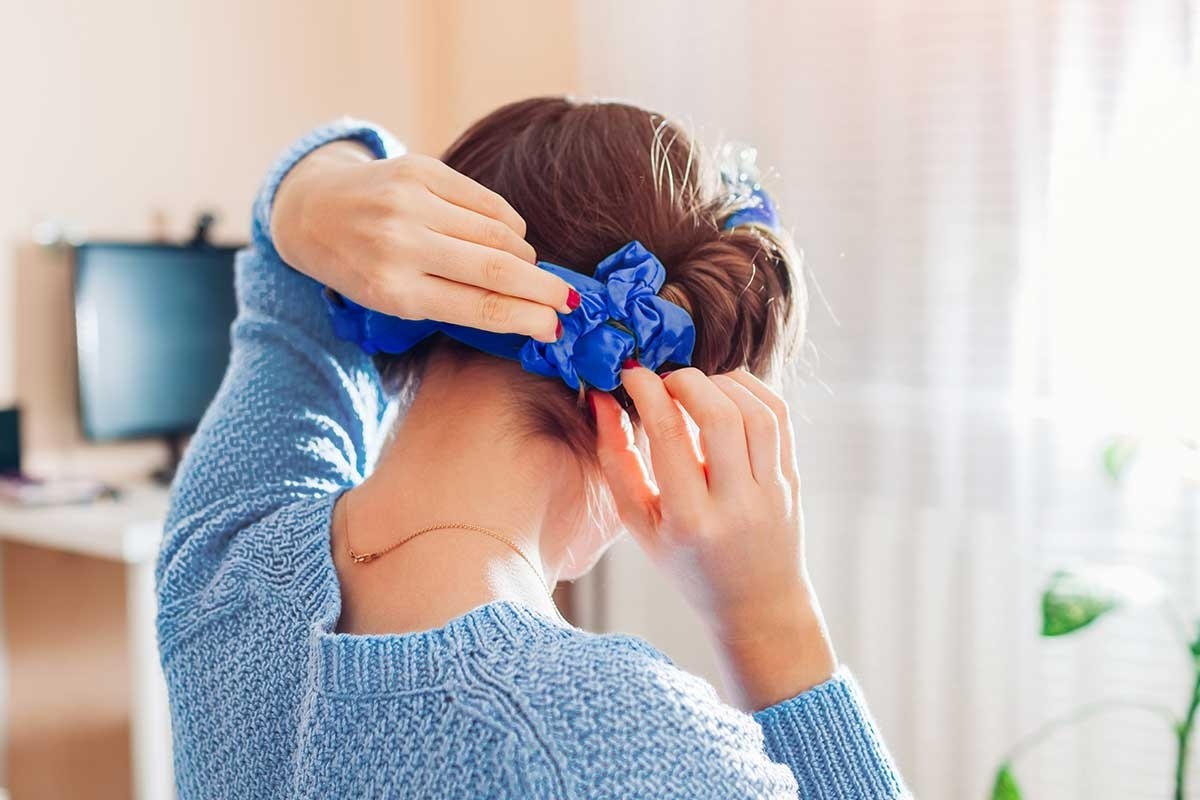
Here’s the tricky part: heatless curlers do not just sit in your hair—they can change how your head rests on the pillow. Rollers, rods, wrapped sections, clips, and ties can all add extra height or pressure in places you may not notice until you lie down. Amerisleep notes that overnight rollers can help create curls while avoiding heat styling, but the setup can take some practice to make comfortable (“How to Sleep in Overnight Rollers and Hair Curlers,” 2025). If you sleep on your side, added bulk may feel especially noticeable because the side of your head presses directly into the pillow. That’s where support comes in: the goal is to give your curlers enough room while keeping your head, neck, and shoulders comfortable enough for real sleep.
Your sleep position can completely change how heatless curlers feel once you lie down. Start by thinking about where your curlers land when your head hits the pillow. Amerisleep recommends choosing softer rollers and paying attention to placement, so the curlers are less likely to press uncomfortably while you sleep (“How to Sleep in Overnight Rollers and Hair Curlers,” 2025). If you’re a side sleeper, you’ll probably feel the most pressure because the sides of your head have the most pillow contact. Back sleepers may have more room to work with, especially if larger curlers are placed toward the sides or crown so that the back of the head can rest more comfortably. Stomach sleepers may have the trickiest setup, since turning the head to one side may push curlers into the pillow and make the neck feel less supported. No matter what your sleep style, do a quick pillow test before committing for the night: can your head and neck stay supported while your curlers still have enough space to stay put?
Think of your pillow as part of the heatless-curl setup, not just something you sleep on. If your curlers are adding extra shape around your head, your pillow needs to work with that—not press everything harder into your scalp. The right pillow should help support your head and neck while giving your curlers enough room to sit comfortably. Before you settle in, ask yourself: does my pillow keep my neck in a natural position, or is it making the curlers feel more noticeable?
From there, match the pillow to how you actually sleep. Side sleepers may want more adaptive support. Back sleepers may prefer a pillow that helps support the natural curve of the head and neck. If you sleep on your stomach, a softer, lower-profile option may feel less bulky. And if you flip from side to back to stomach throughout the night, you may find the best flexibility with adjustable fill so you can personalize the height and feel to better match your sleep style.
A few small tweaks can make a big difference once your head hits the pillow. Start with the wrap itself: secure is good, but tight is not the goal. If you feel pulling at your scalp before you even lie down, that tension is probably going to feel even more noticeable overnight. Keeping the wrap snug but gentle can make it easier to relax, and it can also help your curls look softer and more natural in the morning.
Next, check how wet your hair is before you start wrapping. If it is soaking wet, you may be setting yourself up for a longer, less comfortable night. Amerisleep recommends starting with hair that is mostly dry rather than soaking wet, since very wet hair can take longer to dry and may feel less comfortable overnight (“How to Sleep in Overnight Rollers and Hair Curlers,” 2025). Think damp, not dripping: enough moisture to help the curl set, but not so much that the curlers feel heavy or chilly while you sleep.
Finally, give everything a quick “can I actually sleep like this?” check. Soft scrunchies, satin ties, or gentle clips can help keep curlers in place, especially if you toss and turn, but they should not create extra pressure points. The sweet spot is enough hold that your curls stay put, without making the setup feel tight, heavy, or restrictive.
Heatless curls work best when your overnight routine supports both the style you want and the sleep your body needs. The right technique, a comfortable setup, and a supportive pillow can help reduce pressure, limit shifting, and make it easier to rest while your curls are set.
A Note from Sealy®: We love sharing tips to help you achieve better sleep. While we strive to provide objective, industry-standard insights, we also design and manufacture products to address specific sleep challenges.
Leaving curlers in your hair overnight may change the way your head interacts with your sleep setup, which can sometimes impact your sleep.
The best sleep position is the one where you feel comfortable and your head and neck are properly supported, but the way you interact with your curlers may differ depending on your position. Side sleepers may feel more impact from overnight curlers since the curlers can change the way your head rests on your pillow. Back sleepers may have an advantage since curlers can be placed higher on the scalp or on the sides of the head.
The most comfortable pillow is largely up to your sleep position and personal preference; however, you may want to look for a pillow that keeps your head level and supports your neck and spine’s natural alignment.
"How to Sleep in Overnight Rollers and Hair Curlers." November 12, 2025. Published by Amerisleep. Read the article. Full URL: https://amerisleep.com/blog/how-to-sleep-in-overnight-rollers-and-hair-curlers This article discusses techniques for sleeping more comfortably with overnight rollers and heatless curlers, including choosing softer rollers and adjusting placement.
You’re using an unsupported web browser.
A list of the most popular browsers can be found below. Just click on an icon to visit the download page.
Your phone or tablet is using software unsupported by our website. To improve your shopping experience, please update your device to the latest version of iOS or Android OS.


